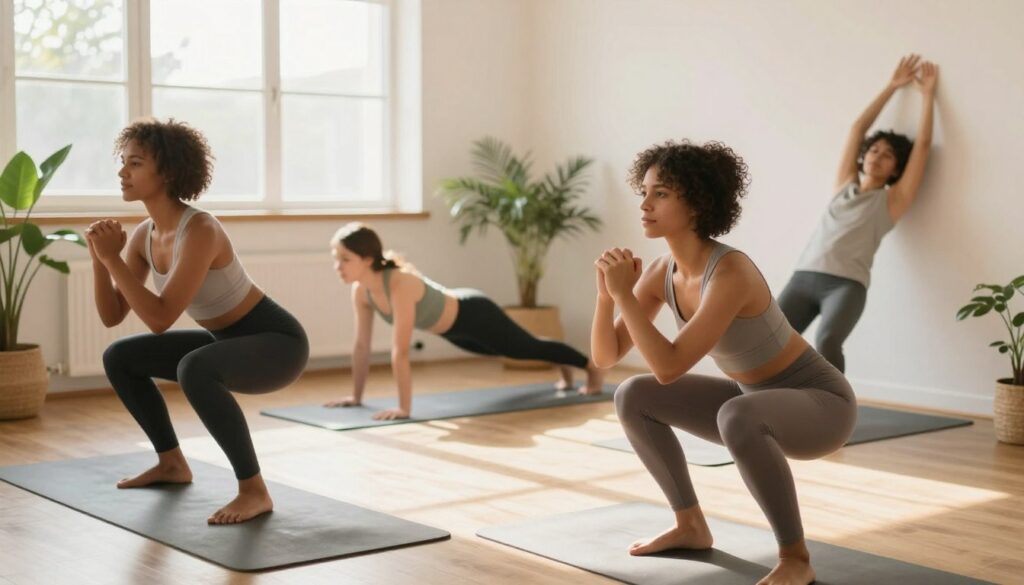

Starting a new exercise routine can be daunting, especially for beginners. However, with the rise of at-home fitness, it’s never been easier to get started. You don’t need any fancy equipment or a gym membership to get a great workout.
A beginner workout at home can be just as effective as one at the gym. You can start with simple exercises like push-ups, squats, and lunges, and gradually increase the intensity as you get more comfortable. This approach not only saves time and money but also provides the flexibility to work out in the comfort of your own space.
Key Takeaways
- No equipment is needed to start a beginner workout at home.
- Simple exercises like push-ups and squats are great for starters.
- At-home workouts offer flexibility and convenience.
- You can gradually increase the intensity of your workouts.
- Working out at home saves time and money.
Why Home Workouts Are Perfect for Beginners
Home workouts are an ideal starting point for beginners looking to establish a consistent fitness routine. They offer a comfortable and accessible way to start exercising without the intimidation of a gym environment.
Benefits of Working Out at Home
Working out at home provides several benefits, including:
- Privacy and comfort in your own space
- Flexibility to exercise at any time
- Savings on gym memberships and commuting time
These advantages make home workouts an attractive option for those new to exercise.
No Equipment, No Problem
One of the biggest misconceptions about working out is that you need expensive equipment. However, bodyweight exercises can be just as effective. Exercises like push-ups, squats, and lunges are great for building strength and improving fitness without any equipment.
Fitting Exercise Into Your Schedule
Fitting a workout at home into your schedule is easier than you think. Even short sessions of 15-20 minutes a day can be beneficial. The key is consistency and finding a routine that works for you.
By incorporating exercise for beginners into your daily routine, you’ll be on your way to a healthier lifestyle.
Setting Up Your Home Workout Space
A well-designed home workout area can significantly enhance your exercise experience. To create an effective space, consider a few key factors.
Finding the Right Area
Identify a room or corner with enough space to move around comfortably. It should be well-ventilated and have a smooth, even floor. Consider using a room with a mirror to help you maintain proper form during exercises.
Creating a Motivating Environment
Make your workout space motivating by adding elements that inspire you, such as:
- Uplifting music or motivational quotes
- Good lighting to boost your mood
- A water bottle and towel within reach
Safety Considerations
Ensure your workout area is safe by clearing any clutter, securing loose objects, and using a non-slip mat if necessary. Be mindful of your surroundings to avoid accidents.
By following these tips, you can create a home workout space that is both motivating and safe, helping you stay on track with your fitness goals.
Essential Home Workout Principles for Beginners
For those new to working out at home, it’s crucial to grasp the fundamentals that ensure a safe and effective exercise routine. Understanding these principles can make a significant difference in achieving your fitness goals.
Understanding Proper Form
One of the most critical aspects of any workout is using proper form. This not only maximizes the effectiveness of the exercise but also minimizes the risk of injury. Proper form involves understanding the correct posture, movement, and engagement of the relevant muscles.
Listening to Your Body
Listening to your body is equally important. It involves being aware of your physical limits and not pushing yourself too hard, especially when you’re just starting out. Rest and recovery are as crucial as the exercise itself.
Consistency Over Intensity
For beginners, consistency is more important than intensity. Establishing a regular workout routine and sticking to it yields better long-term results than sporadic intense workouts. Consistency helps build habits and gradually improves fitness levels.
| Principle | Benefit |
|---|---|
| Proper Form | Reduces injury risk, maximizes exercise effectiveness |
| Listening to Your Body | Prevents overexertion, promotes recovery |
| Consistency | Builds habits, improves long-term fitness |
Effective Warm-Up Routine
A well-structured warm-up routine can significantly enhance your workout performance. It’s not just about getting ready to exercise; it’s about preparing your body to work out safely and effectively.
Dynamic Stretching Exercises
Dynamic stretching involves moving your joints through a range of motion while keeping your muscles active. Examples include leg swings, arm circles, and torso twists. These exercises help increase blood flow and temperature in your muscles, making them more receptive to the upcoming workout.
Joint Mobility Drills
Joint mobility drills are essential for maintaining or improving the range of motion in your joints. Simple exercises like neck rotations, shoulder rolls, and ankle circles can help reduce stiffness and prepare your joints for more strenuous activities.
Preparing Your Body for Exercise
A good warm-up routine doesn’t just prepare your muscles and joints; it also gets your cardiovascular system ready for more intense exercise. By gradually increasing your heart rate and blood flow, you’re ensuring that your body is well-oxygenated and ready to perform at its best.
Upper Body Home Workout Exercises
Upper body workouts at home are not only convenient but also highly effective for building strength. You can achieve a toned upper body without any equipment, using your own body weight as resistance.
Push-Up Variations for Beginners
Push-ups are a staple upper body exercise that target multiple muscle groups. Here are a few variations for beginners:
- Wall Push-Ups: Perfect for those who are just starting out, wall push-ups reduce the intensity.
- Knee Push-Ups: Modifying traditional push-ups by placing your knees on the ground reduces the strain on your lower back.
- Incline Push-Ups: Using a chair or bench can make push-ups easier by changing the angle.
Arm and Shoulder Exercises
Strengthening your arms and shoulders can be achieved with simple bodyweight exercises. Try these:
- Arm Circles: Hold your arms straight out to the sides and make small circles.
- Tricep Dips (using a chair): Sit on the edge of a chair with your hands grasping the edge, and lower your body by bending your elbows.
Back Strengthening Movements
A strong back is crucial for good posture and overall upper body strength. Here are some exercises:
- Superman: Lie on your stomach with your arms extended in front of you, and lift your arms and legs off the ground.
- Bodyweight Rows (using a towel or resistance band): Anchor the towel or band around a stable object, and pull the ends towards you, keeping your back straight.
By incorporating these exercises into your routine, you can effectively work on your upper body strength without needing any equipment. Start with fewer repetitions and sets, and gradually increase as you build strength and endurance.
Core-Strengthening Exercises at Home
Core exercises are crucial for improving balance, posture, and overall physical strength. A strong core enhances your ability to perform daily activities and other exercises more effectively. Here, we’ll explore some effective core-strengthening exercises you can do at home.
Beginner-Friendly Plank Variations
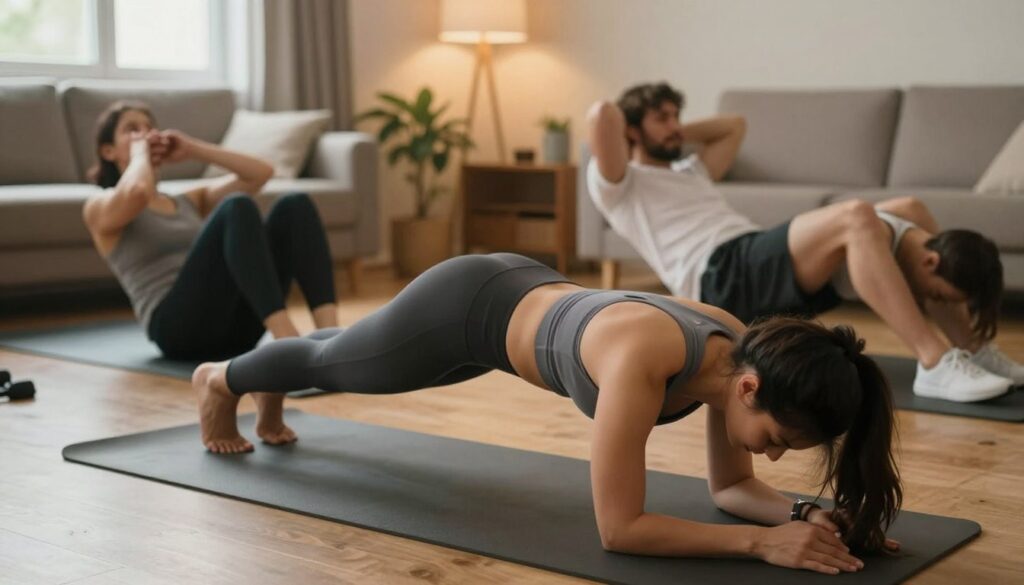
Planks are an excellent way to build core strength. For beginners, starting with modified planks on knees instead of toes can be less strenuous. Hold a plank position for 20-30 seconds and gradually increase the time as you build endurance. You can also try side planks to target the obliques.
Effective Ab Exercises
For a stronger core, incorporating exercises that target the abdominal muscles is essential. Bicycle crunches and leg raises are highly effective. Bicycle crunches work the rectus abdominis and obliques, while leg raises target the lower abs. Perform these exercises in sets of 10-15 repetitions.
Oblique and Lower Back Work
Strengthening the obliques and lower back is vital for a balanced core. Russian twists are great for targeting the obliques. For the lower back, superman exercises can help strengthen the muscles, improving posture and reducing the risk of back pain. Ensure to balance your workout routine to avoid straining your back.
By incorporating these core-strengthening exercises into your home workout routine, you’ll improve your overall stability, balance, and strength. Start slowly and progress gradually to avoid injury and achieve the best results.
Lower Body Home Workout Moves
You don’t need a gym to work on your lower body; effective exercises can be done at home. A strong lower body is essential for overall fitness, improving balance, and enhancing athletic performance.
Squat Variations for All Levels
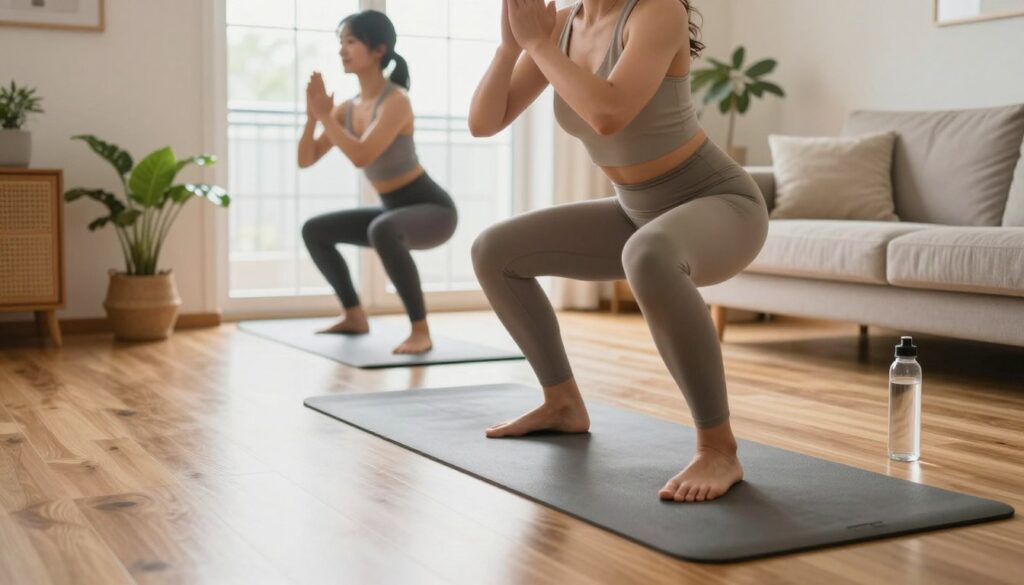
Squats are a fundamental exercise for building leg strength. Bodyweight squats are a great starting point, and as you progress, you can try variations like sumo squats or pistol squats to challenge yourself further.
- Bodyweight squats: Perfect for beginners, focusing on proper form.
- Sumo squats: Wider stance targets different muscle groups.
- Pistol squats: Advanced exercise requiring balance and strength.
Effective Lunge Exercises
Lunges are another effective lower body exercise that can be done at home. They help improve balance and strengthen the legs. Walking lunges and static lunges are excellent variations to include in your routine.
“Lunges are a versatile exercise that can be modified to suit different fitness levels.”
- Walking lunges: Great for improving balance and coordination.
- Static lunges: Focus on strength and stability.
Calf and Glute Activation
Don’t forget to target your calf and glute muscles. Calf raises can be done standing or seated, while glute bridges are excellent for activating the glutes.
- Calf raises: Standing or seated, targets calf muscles.
- Glute bridges: Effective for glute activation and strengthening.
By incorporating these exercises into your routine, you’ll be on your way to a stronger, more balanced lower body.
Creating Your Complete Home Workout Routine
Developing a comprehensive home workout routine is crucial for achieving your fitness goals. A well-structured routine helps you stay focused, ensures you’re targeting all major muscle groups, and allows for progressive overload without the need for equipment.
Sample Workout Schedules
To get started, you can follow a simple schedule that alternates between upper body, lower body, and core workouts. For example:
| Day | Workout Focus | Exercises |
|---|---|---|
| Monday | Upper Body | Push-ups, Arm Circles, Shoulder Rolls |
| Wednesday | Lower Body | Squats, Lunges, Calf Raises |
| Friday | Core | Plank, Russian twists, Leg Raises |
Balancing Rest and Activity
It’s essential to balance your workout routine with adequate rest and recovery. This allows your muscles to repair and grow stronger. Aim for at least one rest day per week, and consider active recovery techniques like stretching or light yoga on your non-workout days.
Progressive Overload Without Equipment
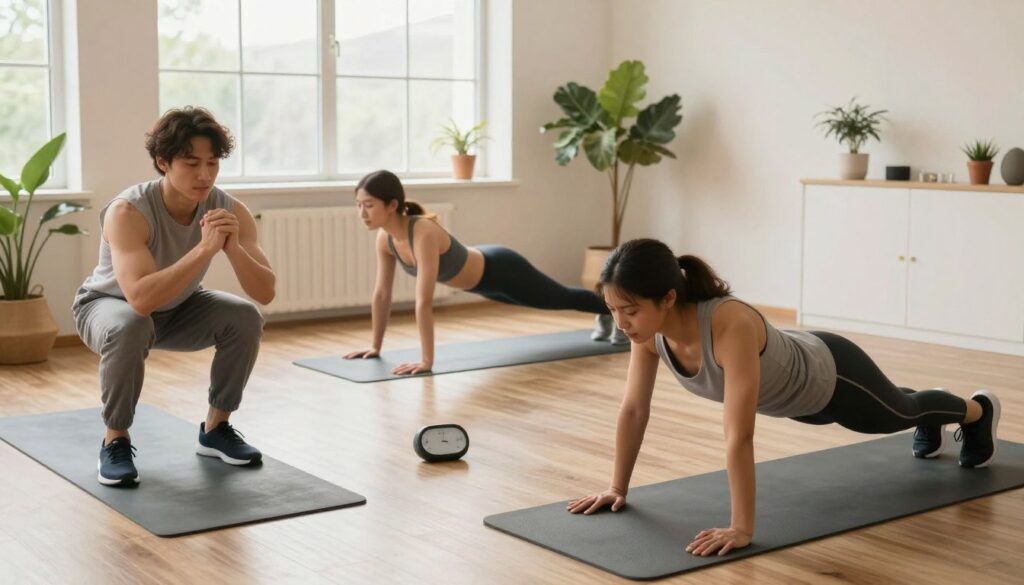
Progressive overload is critical for continued progress in your fitness journey. You can achieve this without equipment by increasing the number of repetitions, sets, or difficulty level of bodyweight exercises. For example, you can move from regular push-ups to diamond push-ups or decline push-ups.
By incorporating these strategies into your home workout routine, you can continue to challenge yourself and make progress towards your fitness goals.
Nutrition Tips to Support Your Home Workout
Proper nutrition plays a vital role in supporting your fitness goals, especially when working out at home. A well-balanced diet not only fuels your workouts but also aids in recovery and overall health.
Pre and Post-Workout Nutrition
Eating the right foods before and after your workout can significantly impact your performance and recovery. Pre-workout nutrition should focus on complex carbohydrates and lean proteins to provide energy. For example, a banana with peanut butter or a small serving of oatmeal with fruit can be ideal.
Post-workout nutrition is crucial for recovery. Consuming a mix of protein and carbohydrates within 30-60 minutes after your workout can help repair muscles and replenish energy stores. A smoothie with protein powder, berries, and almond milk is a quick and effective option.
Hydration Essentials
Staying hydrated is essential for physical performance and overall health. Aim to drink at least 8-10 glasses of water per day, and adjust according to your activity level and climate. Monitoring the color of your urine can also help; it should be pale yellow, indicating proper hydration.
Simple Meal Ideas for Fitness Beginners
For those new to fitness, preparing meals that support workout goals can be straightforward. Here are some simple ideas:
- Oatmeal with fruit and nuts
- Grilled chicken with quinoa and vegetables
- Salads with lean protein and a variety of vegetables
- Smoothies with protein powder, fruits, and spinach
As highlighted by a fitness expert, “Nutrition is the backbone of any successful fitness regimen. By making informed food choices, you can enhance your workout results and achieve your health goals more effectively.”
Staying Motivated With Your Home Workout
Staying motivated with your home workout can be challenging, but with the right strategies, it’s achievable. Maintaining a consistent exercise routine requires more than just initial enthusiasm; it demands a long-term commitment to your fitness goals.
Setting Realistic Goals
Setting realistic and achievable goals is the foundation of a successful home workout routine. By defining clear objectives, you create a roadmap for your fitness journey. For instance, aiming to exercise for 30 minutes, three times a week, is a more manageable goal than vague aspirations like “getting in shape.”
Tracking Progress Beyond the Scale
Tracking your progress is vital to staying motivated. However, it’s not just about monitoring your weight. Consider tracking your workouts, measuring body fat percentage, or taking progress photos. As the saying goes, “Progress is progress, no matter how small.”
“You don’t have to be great to start, but you have to start to be great.”
Building Long-Term Exercise Habits
Building long-term exercise habits involves creating a routine that you can sustain over time. This includes mixing up your workouts to avoid boredom and rewarding yourself for milestones achieved. By doing so, you make exercise a enjoyable and integral part of your lifestyle.
Conclusion: Your Path to Fitness Begins at Home
Starting a home workout routine can be a life-changing decision, offering numerous home workout benefits that extend beyond physical health. By dedicating a space in your home to exercise, you can improve your mental well-being, increase energy levels, and develop a consistent fitness habit.
Throughout this article, we’ve explored the essential principles of home workouts, including proper form, listening to your body, and consistency over intensity. We’ve also discussed various exercises for upper body, core, and lower body, providing a comprehensive foundation for your fitness journey.
As you begin your path to fitness at home, remember that every small step counts. Start with short, manageable workouts and gradually increase intensity and duration. With persistence and patience, you’ll be on your way to achieving your fitness goals and enjoying the many benefits of regular exercise.